Gardening Services Kingston — Recycling and Sustainability Commitment
 Gardening Services Kingston is focused on creating an eco-friendly waste disposal approach that turns garden waste into resources. Our Kingston gardening sustainability programme combines practical on-site segregation with partnerships across the borough to ensure green waste and general garden rubbish are processed responsibly. We prioritise a sustainable rubbish gardening area at every site we visit, aiming to reduce landfill, increase reuse and support circular horticulture within the local community.
We set clear, measurable goals: our current recycling percentage target is to divert 75% of all collected garden and landscaping waste from landfill by the end of the next three years. That target includes composting, chipping, reuse of topsoil and donations of undamaged plants and compostable materials to local groups. A strong emphasis on a low-carbon fleet and route planning helps lower emissions linked to waste collection while supporting the borough's climate action ambitions.
Local transfer stations and borough coordination
Our teams routinely use nearby transfer stations and processing centres such as small-scale composting yards, community-managed transfer hubs and the nearest municipal facilities in the Royal Borough. We align with the boroughs' approach to waste separation, which typically separates food waste, garden waste and mixed recyclables at source. This means we pre-sort on-site into clear streams — wood and branches for chipping, green waste for composting, and non-compostable materials sent to appropriate recycling centres.Charity partnerships and reuse routes
We work with a range of local charities and community groups to ensure useful materials are reused. Our partnerships include community allotments, youth gardening projects and local refurbishment charities that accept reusable plant pots, soil in good condition and salvageable hard landscaping materials. Benefits of these partnerships are many: reduced disposal costs, increased community resilience, and more materials kept in productive use.- Community compost hubs that accept leaf mould and shredded green waste;
- Allotment groups that reuse compost and topsoil;
- Local charities that accept clean pots, tools and reusable timber.
Practical recycling activity in Kingston and surrounding boroughs
The local recycling activity we support mirrors borough-level schemes: separate bins for garden waste (often brown or green), food waste caddies, and mixed dry recycling. We complement those schemes with on-site sorting so that the sustainable rubbish gardening area remains contaminant-free. Shredding for mulch, curated composting and soil improvement are regular outcomes of our recycling rounds, meaning less organic matter heads to residual waste streams.Low-carbon vans and fleet strategy
Our fleet of low-emission vehicles includes plug-in hybrids and fully electric vans adapted for garden equipment. Route optimisation software reduces mileage and idling, lowering the embodied carbon of our waste collections. We also monitor fuel use and emissions to ensure continuous improvement. By choosing low-carbon vans, Gardening Services Kingston reduces transport-related emissions associated with garden rubbish disposal and supports the transition to greener service models across the borough.At each job we implement simple, repeatable practices to create an effective sustainable rubbish gardening area: designated sorting zones, temporary compost bays for fresh green waste, and immediate separation of timber suitable for chipping. These steps are complemented by staff training, so that operatives understand the local waste separation rules and can maximise recycling potential during every visit.
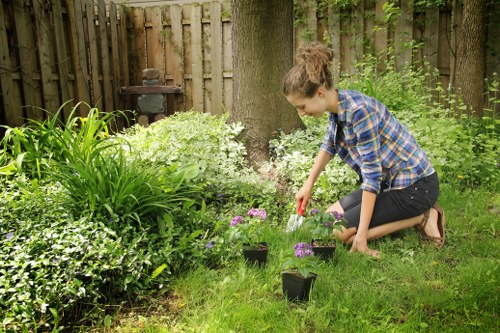
How materials are processed and tracked
We document weight and destination for key waste streams, reporting progress against our recycling percentage target quarterly. Materials destined for composting go to licensed composting facilities or community compost hubs; timber is taken to chipping contractors; reusable items are channelled to charities and social enterprises. This traceability ensures accountability and supports measurable reductions in the environmental footprint of gardening waste.
Creating resilient green spaces with sustainable waste practices
Our integrated approach to gardening waste creates benefits beyond diversion: improved soil health from returned compost, lower demand for peat and virgin aggregates, and stronger community networks through charity partnerships. We use on-site composting and mulching to close nutrient loops, and we maintain clear separation protocols that mirror local council guidance so combined efforts with borough services are effective.To strengthen the local circular economy we remain committed to increasing the borough’s reuse rates and working closely with local transfer stations and community hubs. By combining Gardening Services Kingston operational best practice with ambitious targets, low-carbon transport and charity collaborations, we deliver an actionable model for sustainable garden waste management across the area.
Our pledge is to continually enhance recycling performance and champion an eco-friendly waste disposal culture in every project: prioritising reuse, composting, and low-carbon logistics so that green spaces and communities thrive together.